
The Future of rejuvenating medicine is stem cells, Exosomes, platelet-rich plasma (prp)
& other additives
EXCLUSIVE ANNOUNCEMENT: NEW DEVELOPMENTS IN TREATING TESTICULAR DEFICIENCIES
Prof. Zavos speaks about the creation of a new Global Society (GOGB) that has developed new and innovative technologies in treating various forms of testicular deficiencies.
This remarkable development will be offered soon globally to many couples where the males are suffering from severe oligospermia and even non-obstructive azoospermia.
THE FUTURE OF
MEDICINE IS STEM CELLS
Prof. Zavos speaks about “Stem Cell” research for the treatment of infertile male patients. This is a remarkable achievement for his team and soon this technology will be offered to many couples where the males are suffering from azoospermia, globally.
Featured On
At the Stem Cells Thera Clinic, we help your body restore itself by harnessing your own healing potential with a variety of techniques to combat areas of disease, injury, inflammation or even aging. This process involves a variety of techniques including a minimally invasive procedure conducted at one of our clinics.
We Are Global
Our clinic is committed to bringing proven stem cell treatment options to the general public, all around the world. We are located very strategically in an elite location in Kentucky USA and we implement an aggressive strategic developmental program which is associated with the international medical tourism organizations. ” We help your body restore itself ” Main research facility is located in Cyprus
Why Use Stem Cells?
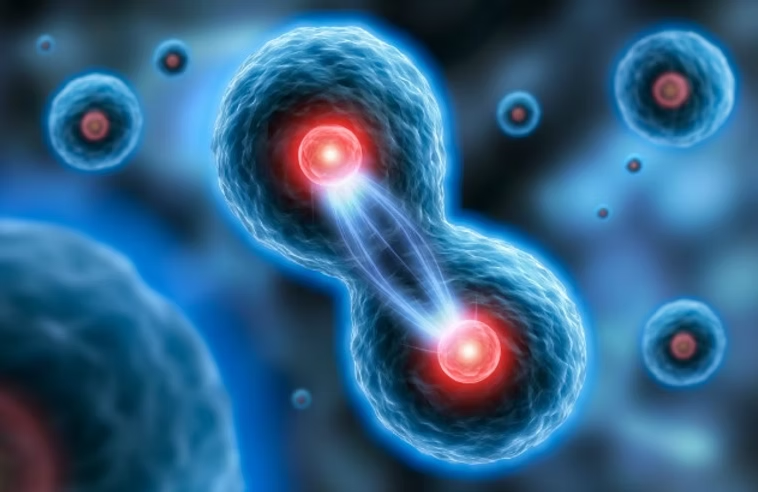
Stem cells are the body’s raw materials — cells (embryonic origin) from which all other cells with specialized functions are derived from. Under the right conditions in the body or a laboratory, stem cells divide to form more cells called daughter cells.
These “daughter” cells either become new stem cells (self-renewal) or become specialized cells (via differentiation) with a more specific function, such as blood cells, brain cells, heart muscle or bone or other. No other cell in the body has the natural ability to generate new cell types. Meanwhile, in today’s medical therapeutics we use this special quality of the stem cells to treat a number of diseases.
In the majority of treatments that are marketed as ‘stem cell treatments’ we use autologous cellular therapies: stem cells are taken from the patient’s own body and re-injected into the patient’s own body to promote regeneration. These modalities hold great promise to the future administration of many medical procedures for treating diseases.
Can Repair and Rejuvenate the Heart
About 7 million people around the world have a heart attack each year and heart diseases are the most common cause of death in Europe. A serious heart attack leaves behind damage that the body can never fully repair. Why can’t the human heart heal itself, whilst some other parts of the body like the skin or blood are constantly renewed and repaired? Research indicates that stem cells give us new hope and ways to mend broken hearts. Very exciting!
Reduced Risk of Transplantation
There has been ample preclinical and animal studies showing efficacy and safety of using various cells, such as stem cells or T regulatory cells, after transplantation for tissue repair, immunosuppression or tolerance induction. However, there has been a significant progress recently using cell therapy in solid organ transplantation in small clinical trials. Recent results have been promising and using cell therapy in solid organ transplantation seems feasible and safe. However, there is more work to be done in this area.
Stem cells may play a major role in cancer
Stem cell transplants can help in some cases with cancer patients suffering from specific types of cancers. In cases with multiple myeloma and some types of leukemia, the stem cell transplant may work against cancer directly because of an effect called graft-versus-tumor that can occur after allogeneic transplants. Stem cell transplants are beginning to further offer positive results for other types of cancer which are being studied in clinical trials, and which research studies involve people. The total prognosis seems very positive and quite promising.
Treat Diseases and Conditions of the Blood and Immune System
The most well-established and widely used stem cell treatment is the transplantation of blood stem cells to treat diseases and conditions of the blood and immune system, or to restore the blood system after treatments for specific cancers. The US National Marrow Donor Program has a full list of diseases treatable by blood stem cell transplant. More than 26,000 patients are treated with blood stem cells in Europe each year.
Stem cells can be coaxed into becoming any number of different types of cell by giving them the right signals at the right time. Their potential for use in regenerative medicine is vast, spanning therapies to treat genetic diseases such as sickle cell anemia, to potentially generating entire organs in the lab.
A Word From Our Specialists

Prof. Zavos, USA
“Stem cells are powerful cells that offer tremendous promise for new treatments of an array of deadly and debilitating diseases afflicting mankind”

Dr. Osorio, Mexico
“Stem cells hold great promise for many neurodegenerative disorders such as Huntington’s disease, ALS (Lou Gehrig’s disease), traumatic brain injury”

Dr. Navarro, Venezuela
“My experiences have been wonderful… Dr Navarro is always willing to answer my questions.”

Dr. Chana, UK
“Stem cells have recently come to the forefront of biomedical research and routine application based on their enormous therapeutic potential for treating and even curing many diseases”
About
Who We Are?
Thera Stem Cells Clinic is founded on the principle belief that quality of life for our patients can be improved through stem cell therapy. Therefore, we stand ready to provide you with the latest and most exclusive regenerative therapies.
We are a team of medical researchers and practitioners who have an outstanding track record and are totally dedicated in offering safe and effective treatments in our point-of-care facilities.

Thera Stem Cells Team
Professor Dr. Panos Zavos
President / founder
Prof. Zavos is the Chief Scientist in the development of several new and innovative technologies in the human reproductive areas with worldwide implications. He is regarded as the “Father of Andrology” and also the “Father of Human Cloning”. He is also the Chief of Andrology at the Andrology Institute of America and President & CEO of several other companies.


Dr. Panayiotis Zavos
Stem Cell Expert
Chief Andrologist
Prof. Zavos is a World class authority on reproductive medicine, somatic cell nuclear transfer, embryonic stem cells and their use in the treatment of human diseases and creation of human organs for human homo transplantation.

Dr. Joel Osorio
Regenerative Medicine
Stem Cell Expert
Dr. Osorio is an innovative businessman with a distinct expertise in Biotechnology & Regenerative Medicine for use in humans in a variety of clinical applications aimed to treat diseases on a global basis.

Dr. Carmen Navarro
Gynecologist-Obstetrician,
Specialist in Human Reproduction
Dr. Carmen Navarro is a well known authority as a clinical pathologist with a great deal in tissue culture, identification expertise and transfusion of cells for systemic disease control.
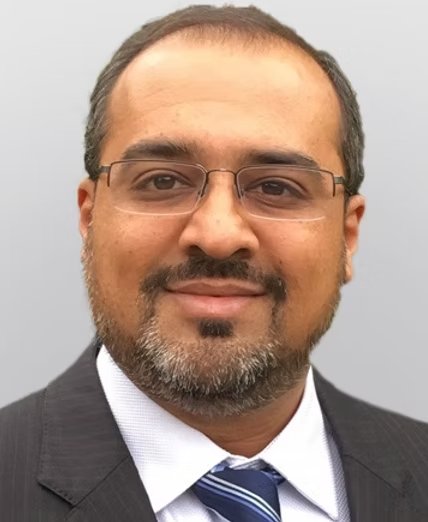
Dr. Rishi Chana
Orthopedic Surgeon
Hip and Knee trauma
Dr. Rishi Chana is a class by itself sports injury & lower limb orthopedic specialist with an expertise in treating both young and old patients who have hip, groin and pelvic pain. A dedicated expert.
Services
An Overview
Stem cells are essential in maintaining the human body. They can develop into many different types of cells. When a stem cell divides, each new cell can either remain a stem cell or become another more specialized type of cell, like a muscle cell, red blood cell or brain cell. This means that stem cells can replace cells that are lost or damaged by injury or disease. They can serve as an internal repair system for your body. Stem cells are a key part of what’s known as regenerative medicine.
Regenerative medicine is the study of self-healing as well as tissue engineering. There are a variety of applications for this field of medicine. Our research scientists and doctors are exploring how regenerative medicine can help the body create new cells in order to repair unhealthy or damaged tissues and organs.

WE CAN NOW Rejuvenate VARIOUS TISSUES AND ORGANS USING stem cells, Exosomes, platelet-rich plasma (prp), HYALURONIC ACID IN VARIOUS COMBINATIONS & WITH other additives
EXCLUSIVE ANNOUNCEMENT: NEW DEVELOPMENTS IN TREATING TESTICULAR & OVARIAN DEFICIENCIES
Prof. Zavos speaks about the creation of a new Global Society (GOGB) that has developed new and innovative technologies in treating various forms of testicular and ovarian deficiencies.
These remarkable developments will be offered soon globally to many couples where the males are suffering from severe oligospermia and even non-obstructive azoospermia. and for females suffering from various forms of ovarian failures and disfunctions.
Contact us at Profzavos@zavos.org.
Stem Cells Procedures
Stem Cell Procedures for Orthopedic Conditions
The goal for this procedure is to deliver much greater numbers of stem cells to the injured areas of the joints than your body can deliver on its own.
Our professional staff will inject your stem cells and natural growth factors from your blood platelets using advanced imaging guidance into the area in need of repair (real time fluoroscopy or musculoskeletal ultrasound, using your MRI to plan the injection). This allows the professional to pinpoint the exact location of the injection, as well as the dispersion of the cells into the tissues.
Stem Cells Procedures for Cancer Conditions
Research has brought about advances and therapies that yield improved outcomes every day. When undergoing treatment, understanding goals and learning how to optimize your therapeutic plan is helpful for both patients and their loved ones.
Treatment goals depend on the specific type of lymphoma, how far the disease has spread in the body, and on many other individual, patient-specific factors such as age, general health, pre-existing chronic medical conditions, and the ability to tolerate a given drug treatment or regimen.

Stem cells may play a major role in Tumor treatment
For a donor, the process is relatively easy. For the recipient, it can be a long and difficult process, especially when high doses of chemotherapy are needed to eliminate bone marrow. Complications are common and can include infections, bleeding, and graft versus host disease among others. That said, bone marrow transplants can treat and even cure some diseases which had previously been almost uniformly fatal. While finding a donor was more challenging in the past, the National Marrow Donor Program has expanded such that many people without a compatible family member are now able to have a bone marrow/stem cell transplant.

Mesenchymal Stem Cells (MSCs) Treatment
(MSCs) are found in the bone marrow and are responsible for bone and cartilage repair. On top of that, they can also produce fat cells. Early research suggesting that MSCs could differentiate into many other cell types and that they could also be obtained from a wide variety of tissues other than bone marrow have not been confirmed.
There is still considerable scientific debate surrounding the exact nature of the cells (which are also termed Mesenchymal stem cells) obtained from these other tissues.

Stem Cell Treatment of Azoospermic Males
Our researcher team can now grow stem cells in our lab which can be programmed to specialize into specific types of cells which when introduced into a particular organ or tissue to be able to proliferate further and give rise to similar tissue and help rehabilitate the deficient organ. In our case, the specialized stem cells can then be implanted into the testes via a specific methodology that we have developed as “testicular perfusion” which can enable the deficient testes of an azoospermic male with Sertoli-only-Syndrome to begin producing sperm that can be used further for procreation. The procedure is at its early experimental stage, but it is beginning to yield positive results that are quite promising. Click here to book your consultation today.
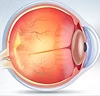
Stem Cell Therapy in Ophthalmological Disorders
Stem cell therapy is being investigated as a way to replace damaged retinal pigment epithelium (RPE) cells and prevent disease progression and further deterioration of photo-receptors. In several studies the researchers differentiated regular stem cells into RPE cells and injected them into patients that had ocular dystrophies and other deficiencies. It is routinely shown that stem cells can act as a source of new, healthy specialized cells and may provide a way to replace damaged cells in the eye.
There are several types of stem cells that could be used in different ways, depending upon the particular disorder to be treated.
Stem CellS, Exosomes, PRP &
Others for Testicular Rejuvenation
The goal for this procedure is to rejuvenate the human testes to enhance the reproductive status in men with various forms of testicular function deficiencies. Furthermore a similar treatment may be applied in a similar fashion to bio-rejuvenate the loss of the testicular function for men entering andropause and wish to reverse such process in order to regain their fecundity or even their whole body youth and vitality.

Stem CellS, Exosomes, PRP &
Others for Ovarian Rejuvenation
The goal for this procedure is to rejuvenate the human ovaries to enhance the reproductive status in women with various forms of ovarian function deficiencies. Furthermore a similar treatment may be applied in a similar fashion to bio-rejuvenate the loss of the ovarian function for women entering menopause and wish to reverse such process in order to regain their fecundity or even their whole body youth.

You may have heard of stem cells before, but there is a lot of mystery about what they actually … do. Why is this such a promising new field?
AFFILIATES & PARTNERS






Frequently asked questions
Stem Cells Frequently Asked Questions


What is a cell?
Cells are the structural and functional units of all living organisms. Some organisms, such as bacteria, are unicellular, consisting of a single cell. Other organisms are multicellular and may have many cells. Humans have an estimated 100,000,000,000,000 (one hundred trillion) cells and more than 200 different types of cells (liver cells, skin cells, muscle cells, etc.).
What is a stem cell?
Stem cells have the remarkable potential to develop into many different cell types in the body. They can divide without limit to replenish other cells, serving as a sort of repair system for the body. When a stem cell divides, each new cell has the potential to either remain a stem cell or become another type of cell with a more specialized function, such as a muscle cell, a red blood cell, or a brain cell.
Are all stem cells the same?
No. Stem cells isolated from different sources and tissues are distinct in that they have varying degrees of potency (see next question) and give rise to differing mature cell types. Additionally, as each person differs slightly at the genetic level (their DNA sequence), the stem cells derived from each individual are likewise different.
What is the difference between totipotent, pluripotent, and multipotent?
Totipotent cells can form all the cell types in a body, plus the extraembryonic, or placental, cells. Embryonic cells within the first couple of cell divisions after fertilization are the only cells that are totipotent. Pluripotent cells can give rise to all of the cell types that make up the body; embryonic stem cells are considered pluripotent. Multipotent cells can develop into more than one cell type, but are more limited than pluripotent cells; adult stem cells and cord blood stem cells are considered multipotent.
How do embryonic stem cells, somatic stem cells, and cord blood stem cells differ?
Embryonic stem cells (ESCs) are derived from the embryo and have the potential to become all the different cell types of the body (pluripotency). Somatic stem cells, sometimes called adult stem cells, are found in organs or tissues, can self-renew and yield the differentiated cell types comprising that organ or tissue (multipotency), and are important for maintenance and repair of the organ or tissue. Cord blood stem cells can be isolated from the umbilical cord of newborn infants and are less mature than adult stem cells. Cord blood stem cells are a type of somatic stem cell. Somatic stem cells are restricted in the types of cells they can produce in the lab.
How are embryonic stem cell lines made (in the lab)?
Embryonic stem cells are usually derived from the inner cell mass of preimplantation embryos, corresponding to 5-9 days after fertilization in humans and 3-4 days in mice. Embryos used to generate human ESCs come from several sources. The first human ESCs were derived from donated embryos left after in vitro fertilization (IVF). IVF embryos analyzed by preimplantation genetic diagnosis can also be used to generate ESCs. An alteration of this technique allows generation of ESCs from single cells removed from embryos in a process similar to preimplantation genetic testing. ESCs can be derived from eggs that have been parthenogenetically activated; that is, the eggs are induced to divide without being fertilized by sperm. Somatic cell nuclear transfer (SCNT) can be used to produce embryos from somatic or adult cells using donated enucleated eggs, and then ESCs can be generated from the resulting embryos.
Where do embryos come from to make new ESC lines?
When embryos are used to generate human ESC lines, they come from donations after in vitro fertilization cycles by individuals who have given written informed written consent. Alternatively, hESC lines can be derived from donated eggs that are activated to begin development without fertilization by sperm, or from SCNT embryos.
What are induced pluripotent stem (iPS) cells?
iPS cells are somatic cells that were manipulated to exhibit properties of embryonic stem cells. Introduction of a set of four factors into somatic cells, along with specific culture conditions, alters each cell’s epigenetic signature, resetting the cell to a pluripotent ESC-like state. This process is termed “reprogramming.” Like ES cells, iPS cells can be differentiated into many different cell types in the lab, and mouse iPS cells have passed even the most stringent tests for pluripotency.
Is it true that some somatic stem cells in our bodies can be the source of common cancers?
So-called cancer stem cells are cancer cells that have stem cell-like properties, i.e., they can self-renew and differentiate into other cell types. They are associated with some, but not all, types of cancers. Data suggest that recurrence of some cancers is caused by a failure of current therapies to target and kill these cancer stem cells. However, the relationship between cancer stem cells and somatic stem cells is unclear. Somatic stem cells can become cancerous, but cancer stem cells do not necessarily come from somatic stem cells.
How are stem cells currently used to treat disease?
Somatic stem cells, such as blood-forming stem cells in bone marrow (called hematopoietic stem cells, or HSCs), are currently the only type of stem cell commonly used to treat human diseases. Doctors have been transferring HSCs in bone marrow transplants for over 40 years. More advanced techniques for collecting, or “harvesting,” HSCs are now used in order to treat leukemia, lymphoma and several inherited blood disorders.
What are the potential benefits of stem cell research?
The National Institutes of Health indicates that approximately 1.1 million Americans suffer a heart attack each year, and together cardiovascular diseases and cancers are the top two causes of death according to the CDC, with each killing over half a million Americans each year. Regenerative medicine holds the promise of new ways to repair cardiovascular damage and of improved cancer treatment.
What are the risks of stem cell therapy?
As with any treatment, there are certain risks to stem cell therapy, including immune rejection of the cells used in treatment. Stem cells have the potential to divide many times and differentiate into many cell types, which is their great promise. Paradoxically, because of these abilities, stem cells also have the potential to form tumors. These potential risks dictate that both doctors and patients proceed with caution, and thus it is critically important that further research is conducted.
What is the difference between reproductive and therapeutic cloning?
Reproductive cloning involves creating an animal that is genetically identical to a donor animal through somatic cell nuclear transfer. In reproductive cloning, the newly created embryo is placed back into the uterine environment where it can implant and develop. Dolly the sheep is perhaps the most well-known example.
Where can I find information on clinical trials using stem cells?
The National Institutes of Health maintains a registry of current clinical trials, including trials that are recruiting new volunteers. The FDA recently approved the first clinical trial in the US using hESC-derived cells. However, this trial uses cells derived from hESCs; hESCs themselves have not yet been approved for use in clinical trials.
